Can Cranial Facial Release Help With Chronic Sinus Pressure?
What Is Neural Cranial Restructuring?
Imagine waking up every morning with pressure around your forehead, cheeks, or the bridge of your nose. You may feel like your sinuses are constantly congested, even when you don't have a cold. Sometimes, the discomfort comes with headaches, difficulty breathing through your nose, or a persistent feeling of fullness in your face.
If this sounds familiar, you're not alone.
Chronic sinus pressure can be frustrating, especially when the discomfort keeps returning despite trying different remedies. While medications, nasal sprays, and other conventional treatments may help, some people also explore alternative approaches to improve their comfort and overall well-being.
One technique that has attracted attention is Cranial Facial Release (CFR), also known as the nasal specific technique.
But can Cranial Facial Release help with chronic sinus pressure? How does the procedure work? And is it something worth considering if you've been struggling with persistent sinus discomfort?
Let's take a closer look.
What Causes Chronic Sinus Pressure?
Before discussing Cranial Facial Release, it helps to understand why sinus pressure happens in the first place.
Your sinuses are air-filled spaces located within the bones surrounding your nose, forehead, and cheeks. They are connected to your nasal passages through small openings that allow mucus to drain and air to circulate.
When the lining of these spaces becomes inflamed or swollen, normal drainage may become difficult. Mucus can accumulate, contributing to congestion, facial discomfort, and a feeling of pressure.
Chronic rhinosinusitis, commonly called chronic sinusitis, is generally characterized by inflammation lasting at least 12 weeks.
Some common symptoms include:
- Persistent nasal congestion or blockage.
- Facial pressure or a feeling of fullness around the cheeks and forehead.
- Thick nasal drainage or mucus.
- Reduced sense of smell or taste.
- Headaches or facial discomfort.
- Postnasal drip.
- Difficulty breathing comfortably through the nose.
Several factors can contribute to chronic sinus problems, including allergies, nasal polyps, structural abnormalities, and ongoing inflammation.
It's also worth remembering that not every case of facial pressure is caused by sinusitis. Migraines, dental problems, temporomandibular joint (TMJ) disorders, and other conditions can produce similar symptoms.
That's why proper evaluation is important, particularly when symptoms persist or repeatedly return.
This is paragraph text. Click it or hit the Manage Text button to change the font, color, size, format, and more. To set up site-wide paragraph and title styles, go to Site Theme.
What Is Cranial Facial Release (CFR)?
Cranial Facial Release is a specialized technique used by trained practitioners, including chiropractors who have received specific training in the procedure.
It is also known as the nasal specific technique because it involves the use of small inflatable balloons inserted into the nasal passages.
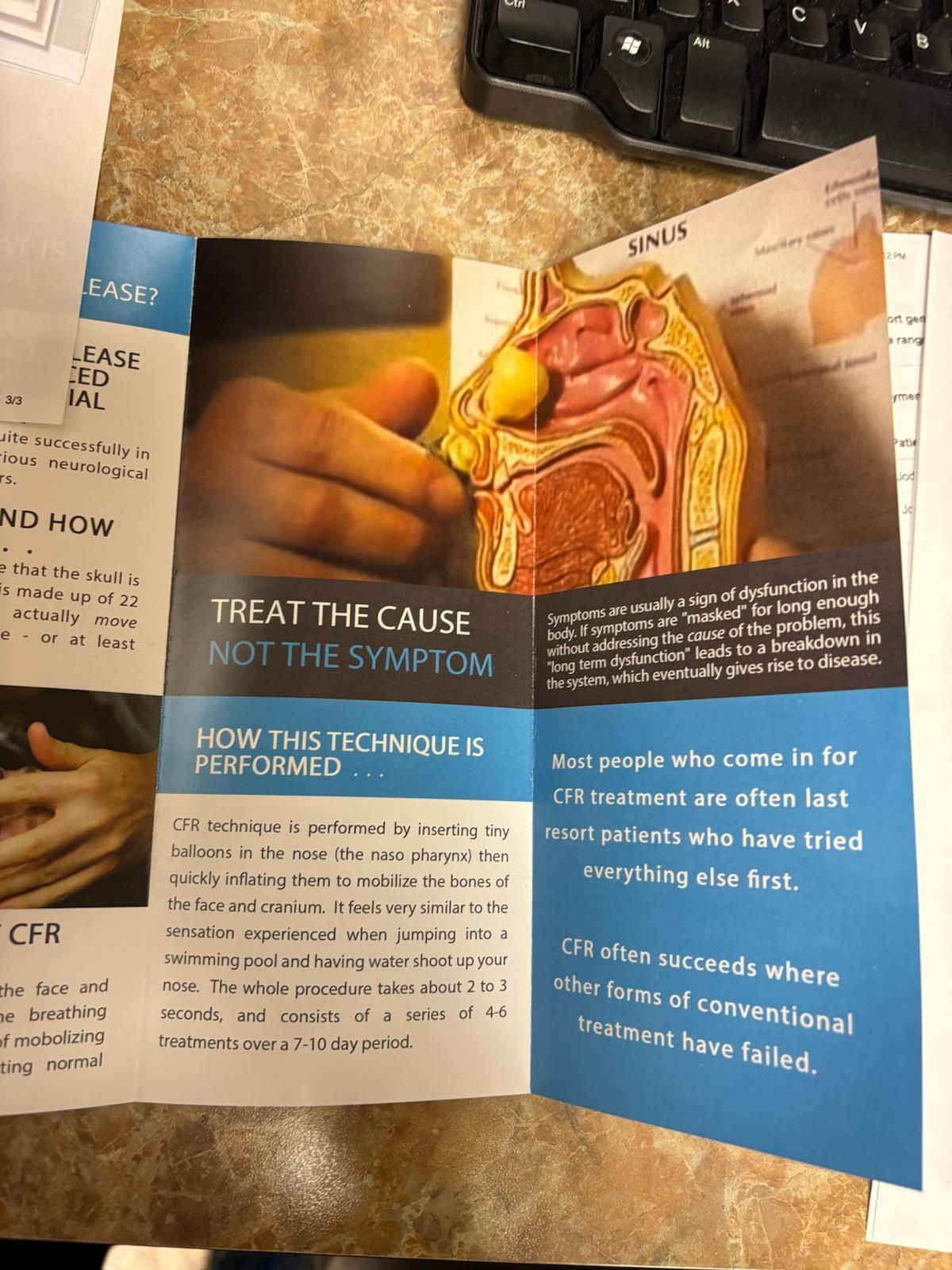
During the procedure, the practitioner carefully positions a balloon catheter inside a nasal passage and briefly inflates it. The technique is intended to apply pressure within the nasal cavity and surrounding structures.
CFR is different from conventional chiropractic adjustments, which generally involve applying controlled forces to joints and other parts of the musculoskeletal system.
Because CFR involves the nasal passages, it is understandable that some people feel curious or even apprehensive when they first hear about it.
A qualified practitioner should explain the procedure, discuss potential risks, review relevant medical history, and obtain informed consent before proceeding.
It is also important to understand that CFR is not the same as medical balloon sinuplasty. Balloon sinuplasty is an ENT procedure performed by a qualified physician to dilate selected sinus drainage pathways. The two techniques should not be confused.

Can Cranial Facial Release Help With Chronic Sinus Pressure?
This is the question many people want answered.
Cranial Facial Release is promoted by some practitioners as an approach for people experiencing nasal congestion, facial pressure, and other sinus-related complaints.
Some patients also report improvements in their subjective sense of nasal breathing and facial comfort following treatment.
However, there is currently insufficient high-quality clinical evidence to establish CFR as an effective treatment for chronic sinusitis or persistent sinus pressure.
One published case report in the Journal of Manipulative and Physiological Therapeutics examined a 41-year-old woman experiencing chronic sinusitis and sinus headaches.
The report described improvements after nasal specific technique and light-force cranial adjustments were added to her treatment.
However, this was a single-patient case report, not a large clinical trial. The researchers themselves emphasized that further investigation was necessary to determine the technique's effectiveness.
You can read the published report here:
Read the research on Nasal Specific Technique and Chronic Sinusitis.
So, what should you take away from this?
CFR is an approach some people choose to explore, but it should not be presented as a proven way to eliminate chronic sinus pressure, cure sinus infections, or reverse underlying sinus inflammation.
If you're considering the procedure, it's important to discuss your symptoms with an appropriate healthcare professional and understand what the available evidence does and does not support.
Why Are People Interested in Cranial Facial Release for Sinus Problems?
Even with the limitations in scientific evidence, people continue to inquire about CFR because they are looking for different ways to address persistent nasal and facial discomfort.
Here are some reasons why the technique attracts interest.
1. It Offers a Different Approach to Nasal Discomfort
People who experience recurring sinus pressure often become familiar with nasal sprays, medications, and other conventional approaches.
Some eventually become interested in learning about techniques outside their usual treatment routine.
CFR offers a different type of procedure because it involves the nasal passages rather than relying on oral medication or topical nasal products.
However, being different does not automatically mean being more effective. Patients should understand the procedure's limitations and discuss whether it is appropriate for their situation.
2. It Is Designed to Apply Pressure Within the Nasal Passages
One distinctive feature of CFR is its use of an inflatable balloon catheter.
The practitioner positions the balloon within the nasal passage and briefly inflates it as part of the technique.
This is the aspect that makes the procedure particularly interesting to people researching nasal specific techniques.
However, the mechanical action of an inflated balloon should not be confused with opening or widening the sinus drainage pathways in the same manner as medically performed balloon sinuplasty.
3. It Attracts People Looking for Additional Wellness Options
Persistent facial discomfort and nasal congestion can affect everyday activities.
They may interfere with sleep, concentration, exercise, and the ability to enjoy daily routines.
Some individuals therefore become interested in exploring complementary wellness services while continuing appropriate medical care.
If you're considering CFR, make sure the practitioner understands your medical history and can explain the potential risks, benefits, and limitations without making unrealistic promises.
What Happens During a Cranial Facial Release Procedure?
If you've never experienced CFR before, you may be wondering what actually happens during a session.
Although the exact process may vary depending on the practitioner, the general procedure involves several steps.
1. Initial consultation
The practitioner discusses your health history, symptoms, concerns, and reasons for considering CFR.
This is an opportunity to ask questions and determine whether the procedure is appropriate. A practitioner should also identify circumstances that require medical or ENT evaluation before proceeding.
2. Explanation of the procedure
Before treatment begins, the practitioner should explain how the balloon catheter is used, what sensations you may experience, and what potential complications are associated with the technique.
You should have an opportunity to provide informed consent and decline the procedure if you are uncomfortable.
3. Positioning of the balloon catheter
If you decide to proceed, the practitioner carefully positions the balloon catheter inside the nasal passage.
4. Brief balloon inflation
The balloon is briefly inflated as part of the nasal specific technique. Patients may experience pressure or discomfort during this step.
Because the procedure involves the nasal passages, it is important that it be performed only by an appropriately trained practitioner who follows suitable safety precautions.
5. Post-procedure discussion
Afterward, the practitioner should discuss your experience, explain any expected after-effects, and provide guidance on what to do if you develop concerning symptoms.
Remember that individual experiences vary. There is no guarantee that someone will experience relief from sinus pressure following CFR.
Is Cranial Facial Release Safe?
Safety is an important consideration, especially when a procedure involves sensitive areas such as the nasal passages.
Although CFR is offered by some chiropractic practitioners, there is limited high-quality research establishing its overall safety profile and complication rates.
Possible concerns associated with procedures involving nasal instrumentation and balloon inflation may include:
- Nasal discomfort or irritation.
- Bleeding from the nasal passages.
- Tissue injury.
- Infection.
- Significant discomfort during the procedure.
These are potential concerns rather than a definitive list of CFR-specific complication rates.
Before considering treatment, ask the practitioner about their training, experience, infection-control procedures, contraindications, and emergency protocols.
People with a history of nasal surgery, bleeding disorders, significant nasal abnormalities, or other relevant medical conditions should seek appropriate medical advice before undergoing an invasive nasal procedure.
If you experience severe pain, significant bleeding, fever, vision changes, or worsening symptoms following any nasal procedure, seek prompt medical attention.
What Are the Proven Treatments for Chronic Sinus Pressure?
While exploring CFR, it's equally important to understand which approaches have stronger scientific support for chronic sinusitis.
According to the American Academy of Otolaryngology–Head and Neck Surgery's 2025 Adult Sinusitis Clinical Practice Guideline, two recommended treatments for symptom relief in chronic rhinosinusitis are:
1. Saline nasal irrigation
Saline irrigation helps rinse mucus, allergens, and other unwanted material from the nasal passages.
It can help improve mucus clearance and provide symptom relief.
If you use a nasal irrigation device, always use distilled, sterile, or previously boiled and cooled water. Keep the device clean according to its instructions.
2. Intranasal corticosteroids
These nasal sprays help reduce inflammation inside the nasal passages and are commonly recommended for managing chronic sinusitis symptoms.
Depending on your condition, a healthcare professional may recommend using these treatments individually or together.
Other treatment options may be appropriate depending on the underlying cause. For example, allergies, nasal polyps, and certain structural problems may require additional evaluation and management.
People with persistent symptoms may benefit from an examination by an ear, nose, and throat (ENT) specialist. A diagnosis of chronic rhinosinusitis should be supported by objective evidence of inflammation, such as nasal endoscopy or appropriate imaging.
You can read the 2025 Adult Sinusitis Clinical Practice Guideline for more information.
Is Cranial Facial Release Right for You?
If you've been struggling with recurring nasal congestion or facial pressure, you may be curious about whether CFR is worth exploring.
Before making a decision, consider the following questions:
- Have you received an appropriate evaluation for your persistent sinus symptoms?
- Do you know what is causing your nasal congestion or facial pressure?
- Have you discussed the procedure with your healthcare provider?
- Does the practitioner have appropriate training and experience in CFR?
- Have you been informed about the potential risks, limitations, and alternatives?
- Do you understand that CFR has not been established as an effective treatment for chronic sinusitis?
Your answers can help you make a more informed decision.
Most importantly, don't postpone medical evaluation or stop prescribed treatment in favor of CFR. Persistent sinus symptoms deserve proper attention, especially when they affect your breathing, sleep, or daily activities.
Explore Cranial Facial Release at My Chiropractor Health & Wellness Center
If you're in Phoenix or Anthem, Arizona, and want to learn more about Cranial Facial Release, My Chiropractor Health & Wellness Center offers CFR as one of its specialized services.
Dr. Greg Muchnij provides consultations for individuals interested in learning about the nasal specific technique and understanding what the procedure involves.
Whether you've been researching CFR for a while or have only recently heard about it, the clinic can help you understand the service, discuss your questions, and learn about the next steps.
The first step is having an honest conversation about your concerns and whether the procedure is appropriate for you.
Interested in learning more about Cranial Facial Release in Phoenix or Anthem?
Contact My Chiropractor Health & Wellness Center today to ask about CFR, discuss the procedure with Dr. Greg Muchnij, and explore your available options.
Your health deserves informed decisions, careful evaluation, and a treatment approach that puts your well-being first.
Can Cranial Facial Release relieve chronic sinus pressure?
Some patients report improvements in their subjective nasal breathing or facial comfort after CFR. However, there is insufficient high-quality clinical evidence to establish that the procedure effectively treats chronic sinus pressure or chronic sinusitis.
How does Cranial Facial Release work?
CFR uses a small inflatable balloon catheter that is carefully inserted into a nasal passage and briefly inflated by a trained practitioner. The technique is intended to apply pressure within the nasal cavity and surrounding structures.
Is Cranial Facial Release the same as balloon sinuplasty?
No. CFR and balloon sinuplasty are different procedures. CFR is a technique offered by some specially trained chiropractic practitioners, while balloon sinuplasty is an ENT procedure designed to dilate selected sinus drainage pathways.
Is Cranial Facial Release painful?
Experiences vary. Some individuals may experience pressure, discomfort, or irritation during the procedure. Ask your practitioner to explain what sensations to expect and what steps they take to protect your comfort and safety.
How many Cranial Facial Release sessions are needed?
There is no scientifically established treatment schedule for CFR for chronic sinus pressure. The number of sessions recommended by a practitioner may vary, but patients should be cautious about guaranteed treatment outcomes or claims that a particular number of sessions will cure sinus problems.
Can Cranial Facial Release cure chronic sinusitis?
CFR has not been established as a cure for chronic sinusitis. Chronic sinusitis is an inflammatory condition that requires appropriate diagnosis and management. Consult an ENT specialist or qualified healthcare professional for evidence-based treatment recommendations.
Where can I get Cranial Facial Release in Phoenix, AZ?
My Chiropractor Health & Wellness Center offers Cranial Facial Release in the Phoenix and Anthem, Arizona area. Contact the clinic to learn about the procedure and consultation availability.
Medical Disclaimer: This article is intended for educational purposes only and should not be considered medical advice, diagnosis, or treatment. Cranial Facial Release has not been established as an effective treatment for chronic sinusitis. Consult a qualified healthcare professional or ENT specialist about persistent sinus symptoms and appropriate treatment options.
Discover Whether Cranial Facial Release Is Right for You
You don't have to keep wondering about your persistent sinus pressure, breathing difficulties, or recurring facial discomfort.
At My Chiropractor Health & Wellness Center in Phoenix, Dr. Greg Muchnij offers Cranial Facial Release (CFR) using the nasal specific technique. If you're curious about this specialized procedure, we're here to answer your questions, explain what to expect, and help you explore your options.
📞 Ready to learn more? Schedule your consultation today and discover whether CFR may be appropriate for your needs.
Your journey toward better well-being starts with an informed decision. Let's take that first step together.
Contact Us
Learning Center